The executive Sprinter-style minibus
A Sprinter-style minibus seats 17 to 19 passengers, with a luggage area behind the last row. It suits small corporate groups, families and airport runs where a coach would be too much.
A bus, with a category D driver
With 17 to 19 passenger seats, this vehicle is a bus (Kraftomnibus) under the PBefG. Category D1 stops at 16 passengers besides the driver, so the driver holds category D. A tachograph records the hours, and the EU drivers' hours rules apply.
For planning, that means the same limits as on a coach: the driver's day has a ceiling. If the group needs the vehicle again later in the day, book both rides and the time between them together.
Typical models
The photos show typical models in this size. Which vehicle runs depends on the partner operator that takes the booking.
Executive minibus (17 to 19 seats)
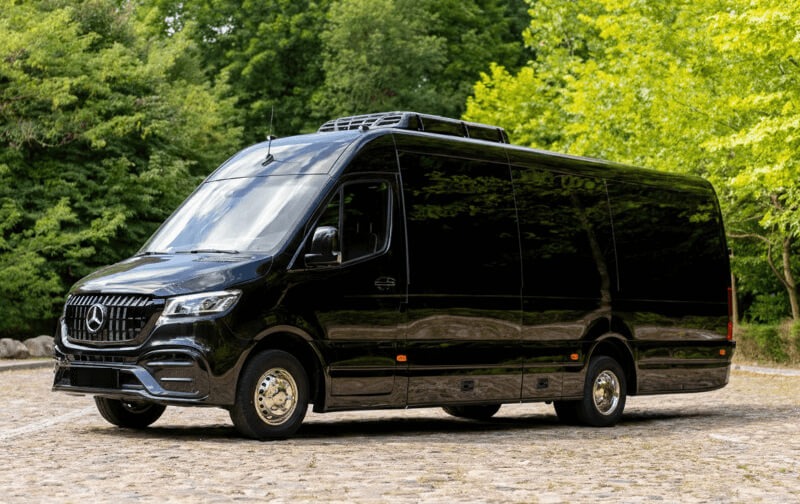
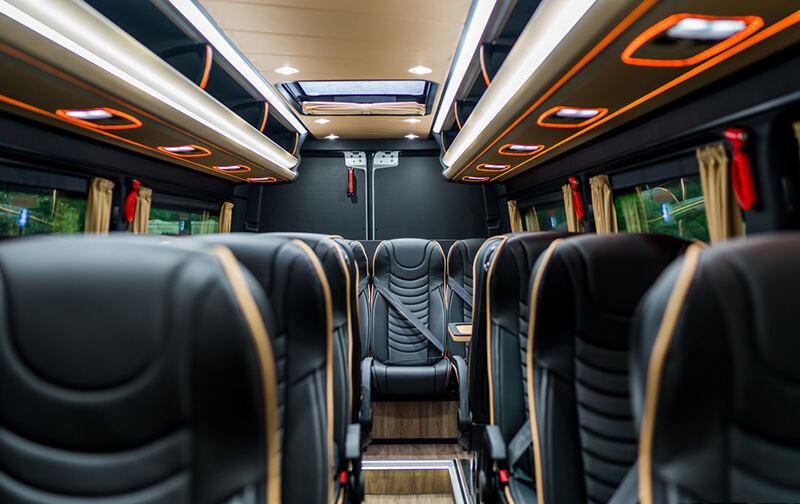
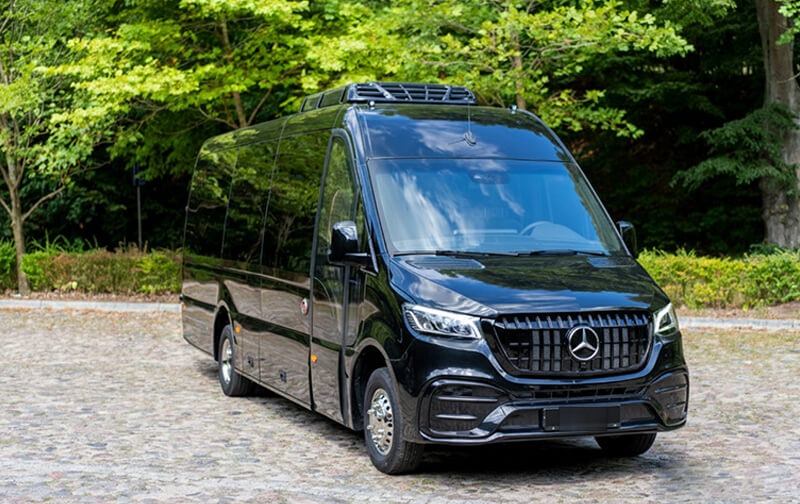
Business Sprinter
17 passengers · 14 bags
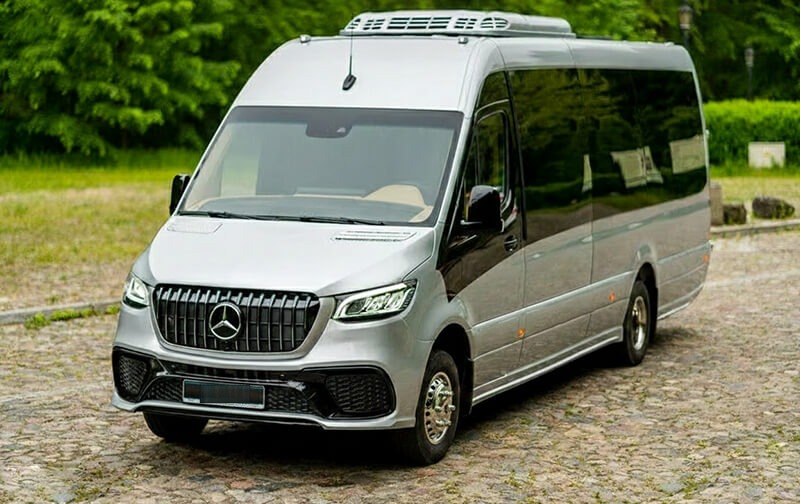
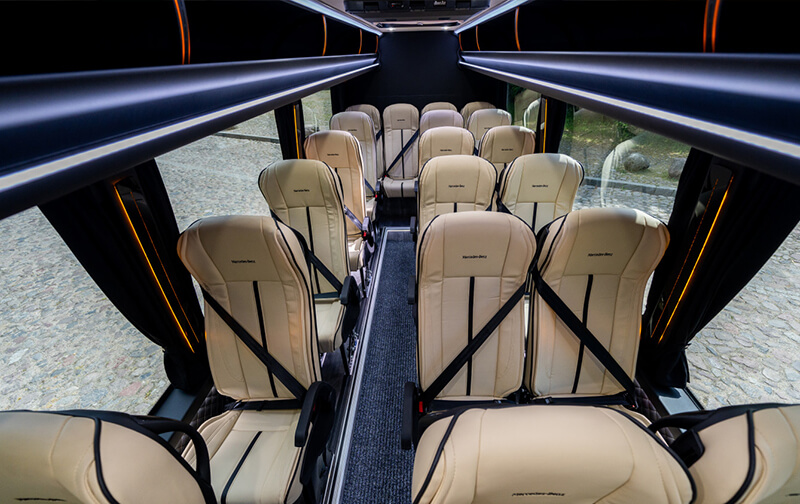
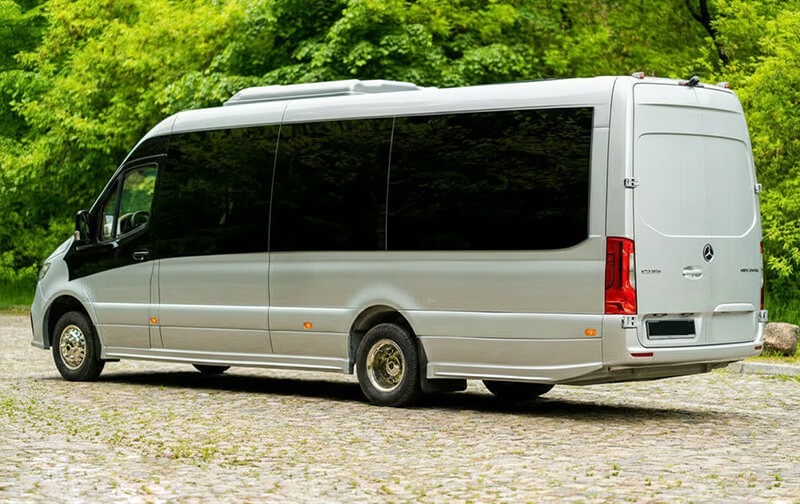
Business Sprinter
19 passengers · 15 bags
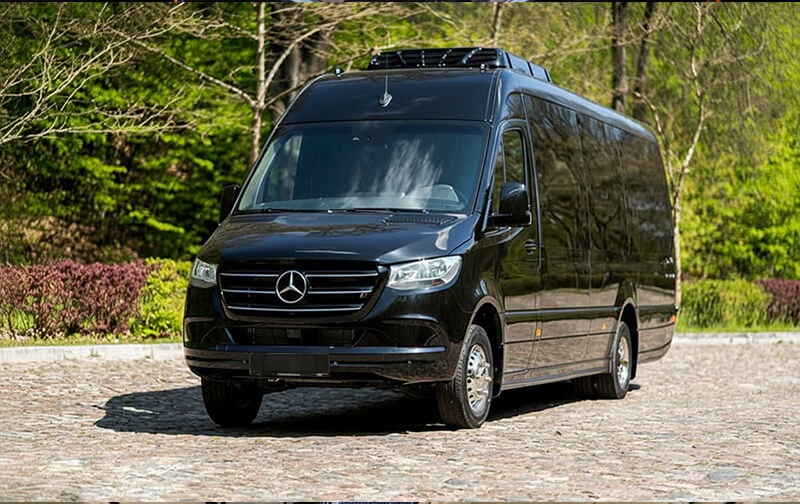
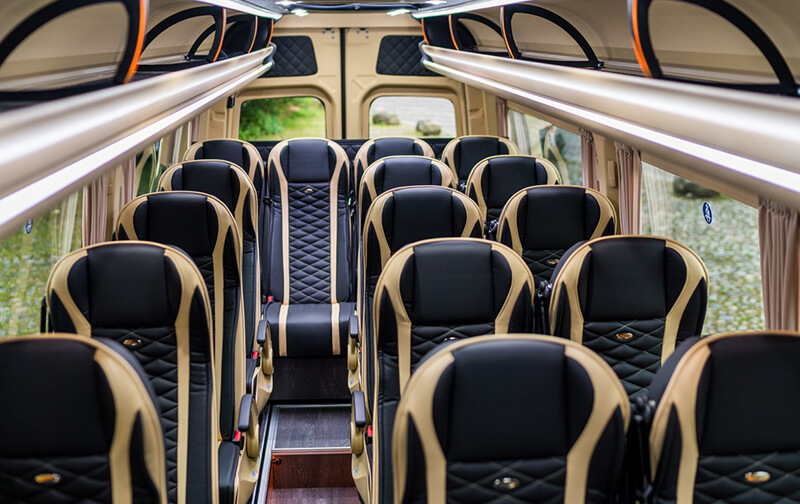
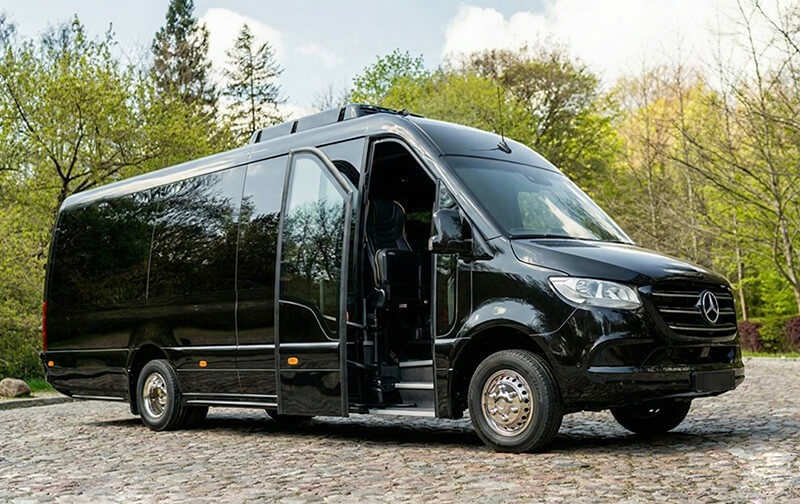
Business Sprinter
18 passengers · 14 bags
Seats and luggage
- Seats: 17-19 passengers plus the driver
- Luggage: Rear luggage area behind the last row of seats
Rules and equipment on board
- Built for 17 to 19 passengers, it counts as a bus (Kraftomnibus) under the PBefG; D1 stops at 16 passengers besides the driver, so the driver needs category D
- With more than nine seats including the driver, it needs a tachograph and follows the EU drivers' hours rules
- Every vehicle entering a German low-emission zone (Umweltzone) needs the green sticker (grüne Plakette), including foreign-registered vehicles; the sticker is valid in every Umweltzone in Germany
- In ice, snow or slush every motor vehicle must have winter tyres (situational winter-tyre rule); for buses, winter tyres are required at least on the permanently driven axles and the front steering axles
Stickers and winter roads
No vehicle enters an Umweltzone without the green sticker, wherever it is registered, and the same sticker works in every German zone.
Germany has no winter-tyre date. In ice, snow or slush, every motor vehicle must have winter tyres; on a bus the rule covers at minimum the drive axles and the steering axles at the front. The road on the day decides, which matters for trips into the Alps.
Luggage behind the last row
The luggage area is behind the rear seats. For an airport transfer with large cases, the seat count is not the whole story. Give the number of bags as well as the number of people. Golf bags, sample cases and pushchairs take more room than suitcases, so list them separately. If the bags will not fit, the answer is usually a larger vehicle rather than a second trip.
Questions organisers ask
Is this the right vehicle for an executive airport run?
For a small team with luggage, often yes. For one to three people, a car with driver is usually enough.
Does the driver need a special licence?
Yes. With 17 to 19 passenger seats the driver needs category D, because D1 covers only up to 16 passengers besides the driver.
Can it wait while we are in a meeting?
Yes, if you book the wait as well as the rides. Include it when you ask for a quote.